

...

How to Talk to a Senior with Hearing Loss: 9 Helpful Tips for Families

How to Talk to a Senior with Hearing Loss: 9 Helpful Tips for Families

How to Talk to a Senior with Hearing Loss- 9 Helpful Tips for Families

Quick Summary

Learning how to talk to a senior with hearing loss requires patience and small adjustments. Get their attention first, speak face to face in good lighting, reduce background noise, speak clearly without shouting, and avoid side conversations. Ask what helps them (e.g., gestures, written notes). Check hearing aids regularly. When repeating, rephrase instead of repeating the same words. Use calm tone and relaxed body language. The 60‑60 rule suggests 60% volume for 60 minutes when using headphones.
  • Get attention first: Say their name, make eye contact, ensure they are ready
  • Face to face: Sit where they can see your face and read facial expressions
  • Speak clearly, not harshly: Use calm voice, steady pace, avoid shouting
  • Reduce background noise: Turn off TV/radio, move to quiet room
  • Speak one at a time: Avoid overlapping conversations in groups
  • Ask what helps: Gestures, notes, or specific seating preferences
  • Check hearing aids: Ensure clean, charged, properly fitted
  • Be patient when repeating: Rephrase instead of repeating louder
  • Watch tone & body language: Stay calm, smile, avoid sighs or annoyance
Estimated read: 4 min
Keywords: hearing loss, senior communication, hearing aids, patience, clear speech

Simple Ways to Make Conversations Clearer and More Respectful

Hearing loss is common in older adults and can make daily conversations harder for the whole family. Hearing loss can develop slowly as people age, according to the National Institute on Deafness and Other Communication Disorders. Families can learn more from this guide to age-related hearing loss.

When you care for an elderly loved one, communication problems may lead to confusion, frustration, or isolation. However, a few simple changes can help. These tips for communicating with a person with hearing loss can make conversations easier and more respectful.

Tip What to Do Why It Helps
Get Attention First Say their name and make eye contact before speaking Helps them focus on the conversation
Speak Face to Face Stay where they can clearly see your face Supports lip-reading and facial cues
Speak Clearly Use a calm voice and steady pace Makes words easier to understand
Reduce Background Noise Turn off TVs, radios, or move to a quiet area Improves speech clarity
One Speaker at a Time Avoid overlapping conversations Reduces confusion in group settings
Ask What Helps Learn their communication preferences Creates a more comfortable experience
Check Hearing Aids Make sure devices are clean and working Improves hearing performance
Rephrase Instead of Repeat Use different words when repeating information Makes the message easier to understand
Use Positive Body Language Stay patient, relaxed, and encouraging Builds confidence and trust

Get Their Attention First

1. Get Their Attention First

Before speaking, gently say their name or make sure they can see you. This gives your loved one time to focus.

Avoid speaking from another room or walking away while you talk. Instead, pause, make eye contact, and begin once they are ready.

2. Speak Face to Face

One of the best ways to improve communication is to speak face to face. Many seniors rely on facial expressions, mouth movements, and body language to understand speech.

Try to sit or stand where your face is easy to see. Good lighting also helps. Avoid standing in front of a bright window because it can make your face harder to read.

3. Speak Clearly, Not Harshly

Many families wonder what is the best way to talk to an older adult with hearing problems. The answer is to speak clearly, slowly, and kindly.

You may need to raise your volume a little, but do not shout. Shouting can distort words and may embarrass your loved one.

Instead:

  • Use a calm voice
  • Speak at a steady pace
  • Keep your hands away from your mouth
  • Avoid mumbling


Reduce Background Noise

4. Reduce Background Noise

Too much background noise can make speech harder to understand. Televisions, radios, fans, loud music, and side conversations can all compete with your voice.

Before you talk to a senior with hearing loss, turn off the TV or move to a quieter room. At family gatherings, choose a seat away from kitchens, speakers, or crowded areas.

5. Speak One at a Time

Group conversations can overwhelm people with hearing loss. When several people talk at once, your loved one may lose track.

Ask family members to speak one at a time. Also, keep side conversations quiet. If your family member seems withdrawn, they may be struggling to follow the conversation.

6. Ask What Helps Them Most

Every senior communicates differently. Some people like hand gestures, while others find them distracting. Some watch facial expressions, while others prefer notes for important details.

To effectively talk to a senior with hearing loss, ask them what works best for them. You might ask, “Would it help if I faced you more directly?” or “Should I make a note of appointment times?”

This shows respect and helps them feel included.


Check Hearing Aids and Assistive Tools

7. Check Hearing Aids and Assistive Tools

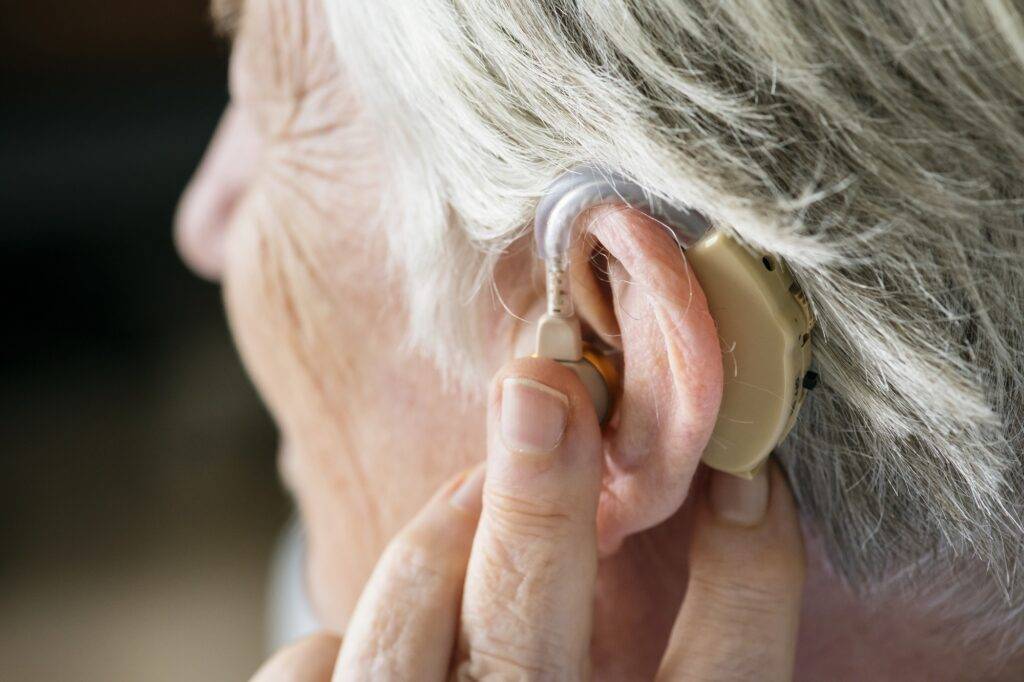
If your loved one uses hearing aids, make sure they are clean, working, and charged or fitted with fresh batteries. Hearing aids can help, but they need proper care and fit.

The Mayo Clinic shares hearing aid options that may help people with hearing loss. If your loved one still struggles, encourage them to speak with a hearing care professional.

8. Be Patient When Repeating Yourself

When you talk to a senior with hearing loss, repeating yourself can feel frustrating. Still, patience matters. Your loved one is not trying to be difficult.

If they do not understand, avoid saying the same words louder each time. Instead, rephrase the sentence. For example, instead of repeating “Your appointment is at two,” try “We need to leave after lunch for the doctor.”

9. Watch Your Tone and Body Language

Seniors with hearing loss may feel uncomfortable asking people to repeat themselves. A sharp tone, sigh, or annoyed look can make them pull away.

Use relaxed body language. Try to stay calm during the conversation. Smile when appropriate. Respectful communication can ease loneliness and help your loved one stay close to family and friends.


Simple Ways to Make Conversations Clearer and More Respectful

Support for Senior’s At-Home in Chicago, IL

Learning how to help elderly with hearing loss starts with patience, respect, and the right support. Families do not have to handle every challenge alone.

An at-home caregiver can help seniors with routines, appointments, social time, and comfort. This support can help seniors communicate more comfortably each day.

Home Care Powered by AUAF provides compassionate in-home care for seniors in the greater Chicago area. To learn how an at-home caregiver could support your loved one, call (773) 274-9262.


Support for Senior Hearing Care in Chicago IL

FAQs About Communicating with Seniors with Hearing Loss

What is the best way to talk to a person with hearing loss?

Face the person, speak clearly, reduce background noise, and use a calm tone. Also, make sure they can see your face.

What should you not say to someone with hearing loss?

Avoid saying “never mind,” “you are not listening,” or “I already told you.” Instead, repeat or rephrase the message with patience.

What is the 60-60 rule for hearing loss?

The 60-60 rule usually means using headphones at no more than 60 percent volume for no more than 60 minutes at a time.

How can seniors improve hearing in old age?

Most people cannot reverse age-related hearing loss. However, hearing aids, regular hearing checks, quieter spaces, and family support can improve daily communication.

Rana Botani is the Assistant Staffing Coordinator Manager at Home Care Powered by AUAF. With more than seven years of experience in Illinois home care services, she specializes in caregiver staffing, staff training, senior care coordination, family caregiver support, Medicaid-funded home care services, and home care operations. Rana holds a Master of Science in Civil Engineering from the University of Illinois Chicago and is certified by the Illinois Department on Aging. She is fluent in English, Assyrian, and Arabic.

Welcome To Home Care

FIRST IN COMFORT. FIRST IN CARE.

Homecare Agency for Seniors – Home Care Powered by AUAF.

Homecare Agency

Contact Request